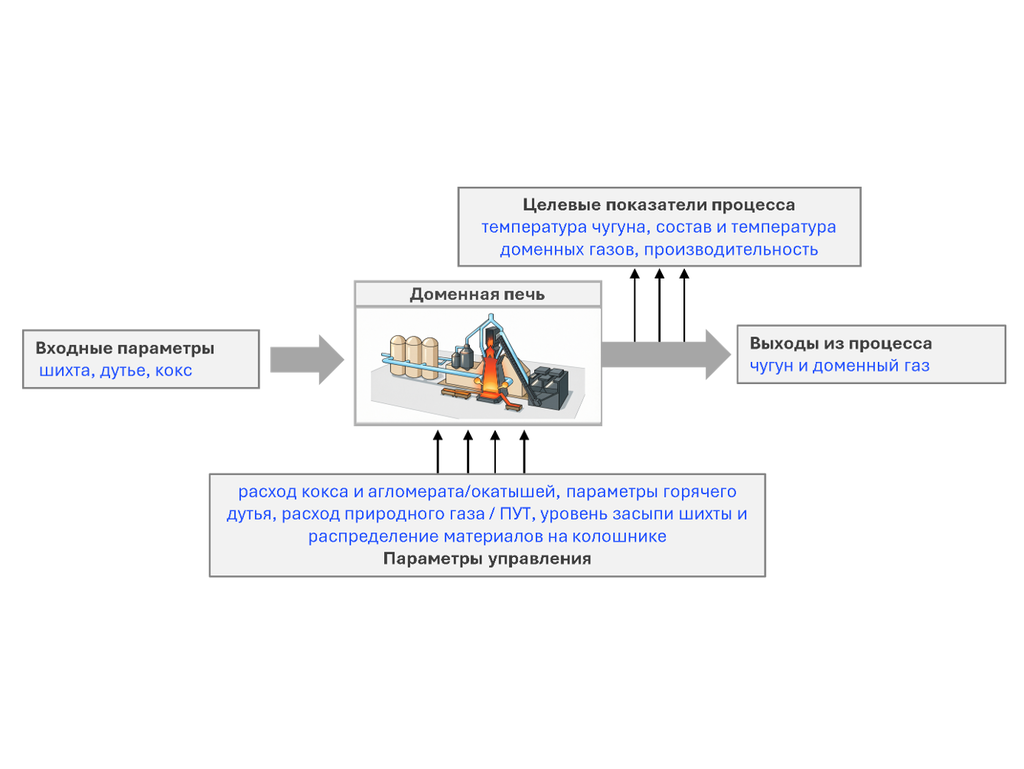
Objective of the Blast Furnace Operation:To reduce iron from oxides and produce liquid iron of a specified composition.
Optimization Objective: To determine the most cost-effective and environmentally friendly operating conditions for the blast furnace while ensuring stable iron quality (Si and S content, temperature).
Optimization Criteria:To minimize coke consumption and energy costs for blast air and pulverized coal injection (PCI), while complying with constraints on iron composition, lining durability, and CO₂ emissions.
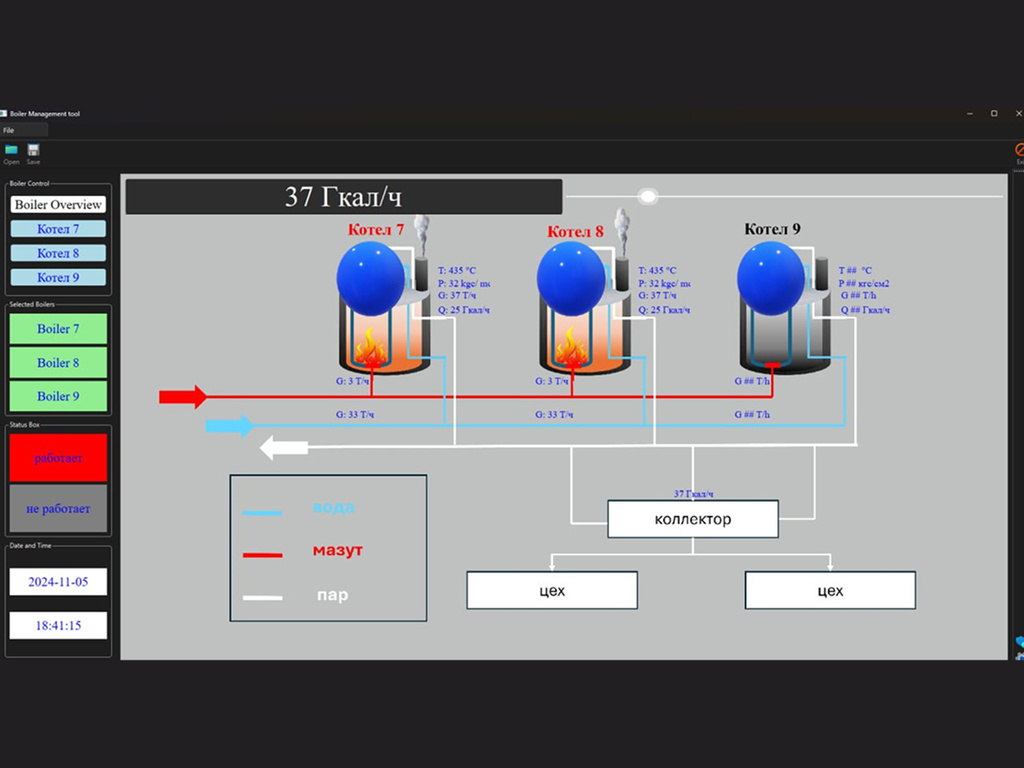
The «Energy source selection and efficient energy management» module helps balance steam generation and consumption across multiple boilers. It analyzes real-time and forecasted demand, as well as the operational characteristics of each boiler, to determine the most efficient operating configuration. When forecasted demand exceeds available capacity, it schedules the activation of an additional boiler while accounting for startup delay.
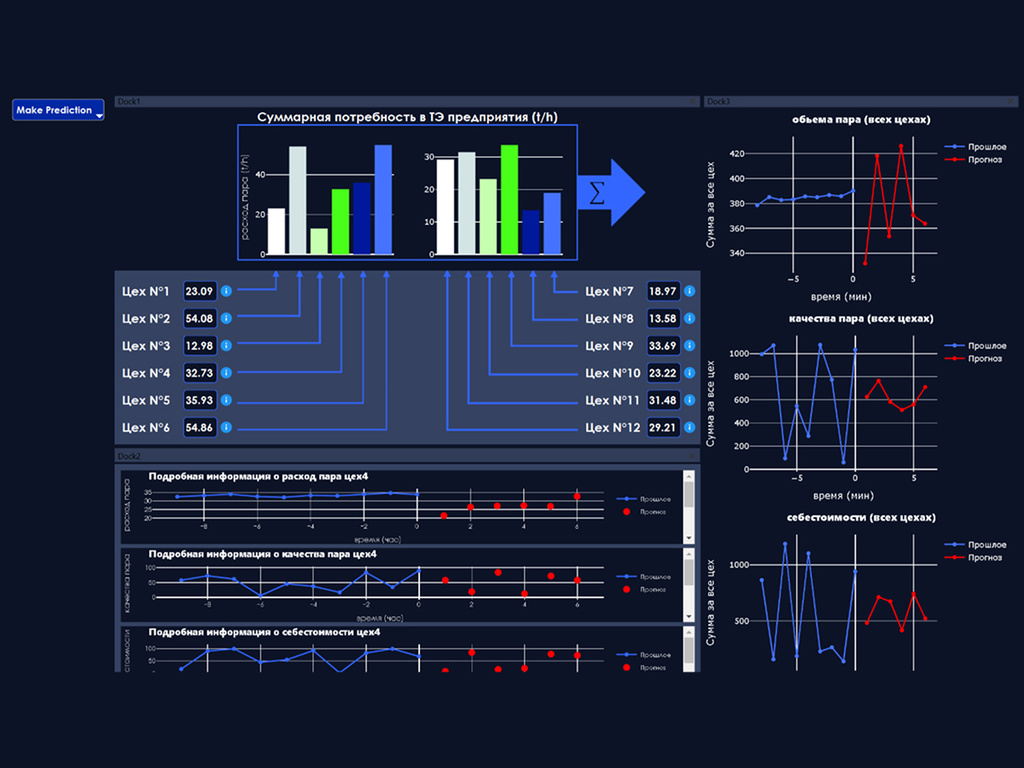
Our platform provides energy consumption forecasts for a plant, where each workshop can have its own customized forecasting model. The interface allows managers and operators to gain a comprehensive view of the enterprise’s energy consumption and control it through a unified monitoring dashboard.
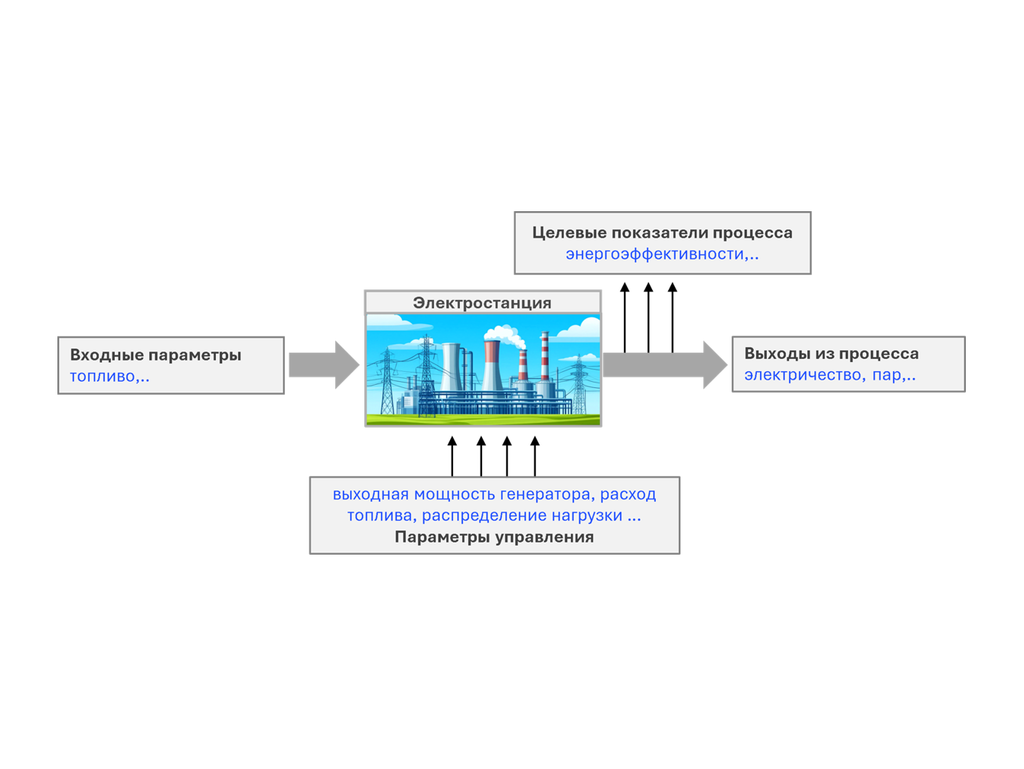
- Control Objective:Effective, stable, and reliable coordination of distributed energy sources.
- Optimization Objective: To reduce costs, increase the efficiency and reliability of the system, and support informed decision-making through AI-driven optimization.
- Optimization Criteria: To minimize operational costs (such as fuel and maintenance expenses), maximize overall energy efficiency, and reduce CO₂ and NOx emissions.
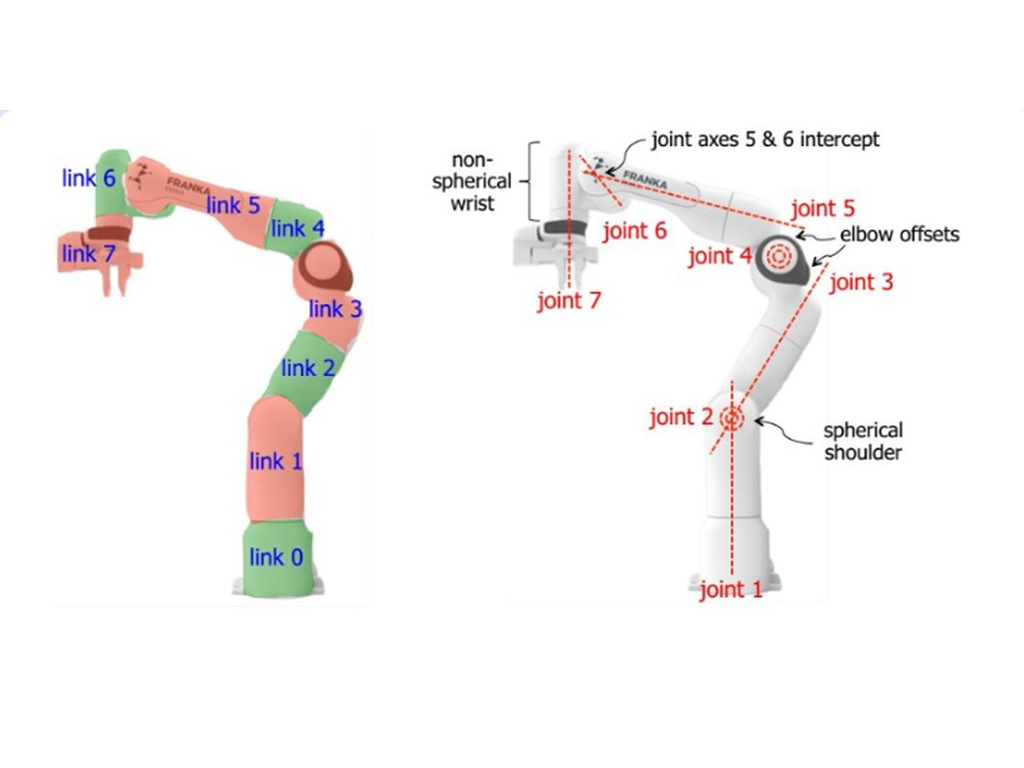
Our platform uses multi-objective optimization (MOO) methods to control a seven-degree-of-freedom (7DOF) robotic manipulator. This approach ensures precise end-effector positioning by balancing multiple objectives, including cost minimization and transition speed maximization.
With MOO, users achieve high efficiency and optimal control, performing complex tasks with increased accuracy and performance.
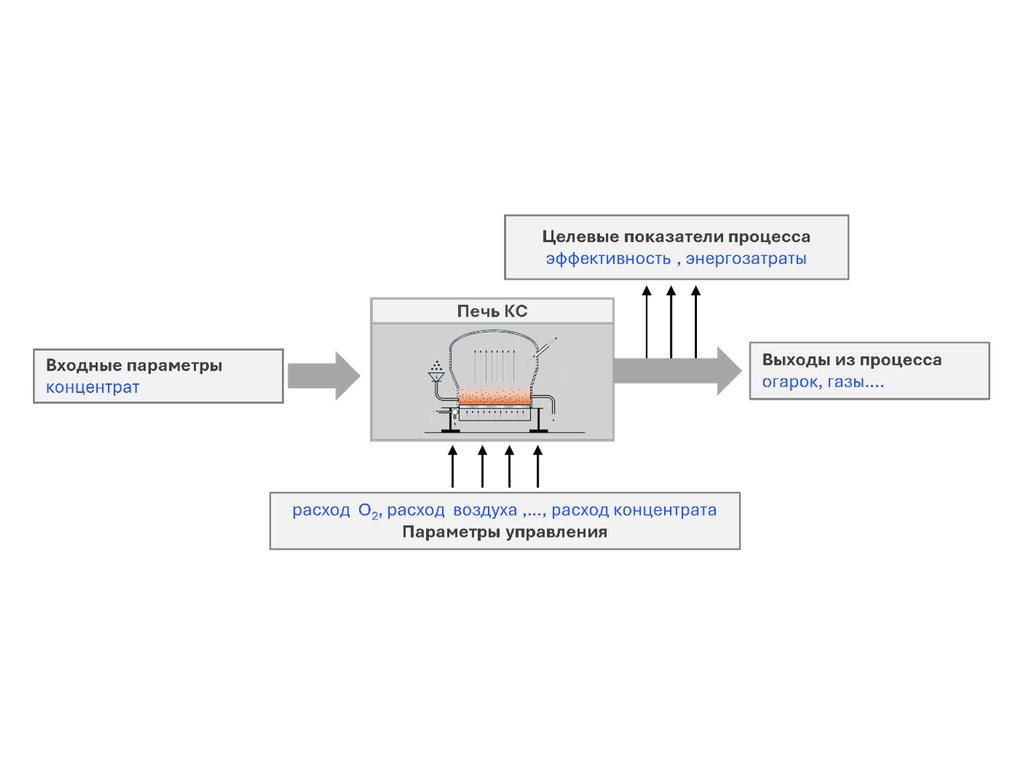
- Objective of the Fluidized Bed Furnace: To remove sulfur from the concentrate and prepare the material for further processing.
- Optimization Objective: To identify economically optimal operating parameters for the fluidized bed furnace while maintaining chemical reaction efficiency.
- Optimization Criteria: To minimize energy consumption while ensuring the specified composition of the off-gases (SO₂ and O₂) based on the sulfur content in the initial concentrate.
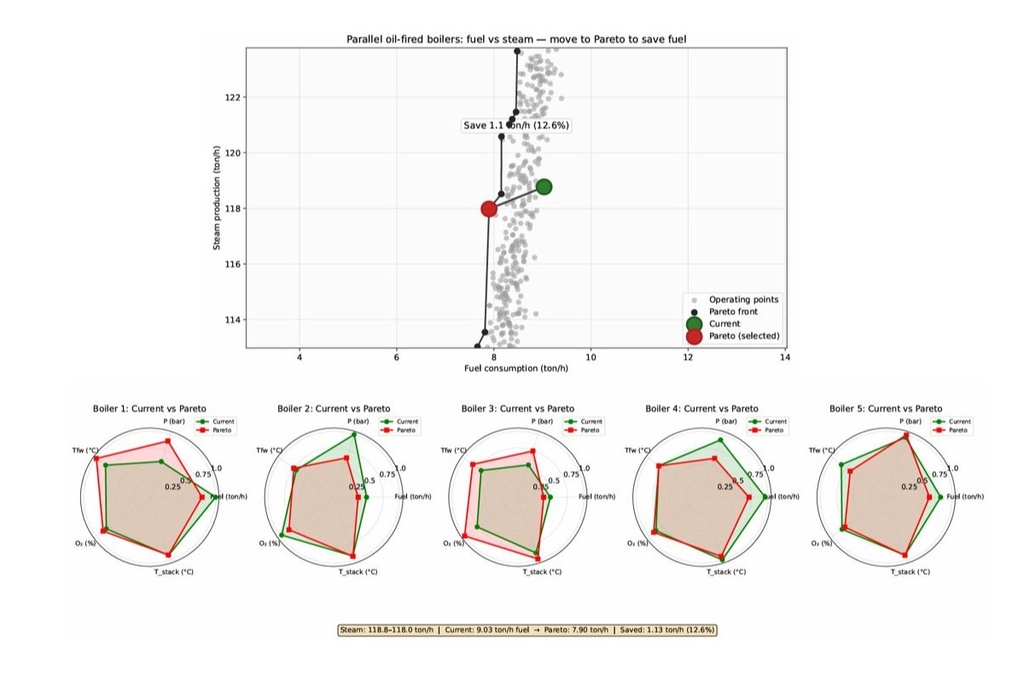
In complex multi-boiler systems, it’s easy to assume that you’re already operating at optimal efficiency. The load is distributed, steam demand is met, and the system is stable.
But stability does not equal optimality.
Our software analyzes the entire boiler system as a single organism, rather than a collection of individual units. We take into account real operational data, efficiency behavior at partial loads, fuel consumption, and steam demand, then mathematically determine the truly optimal operating mode.
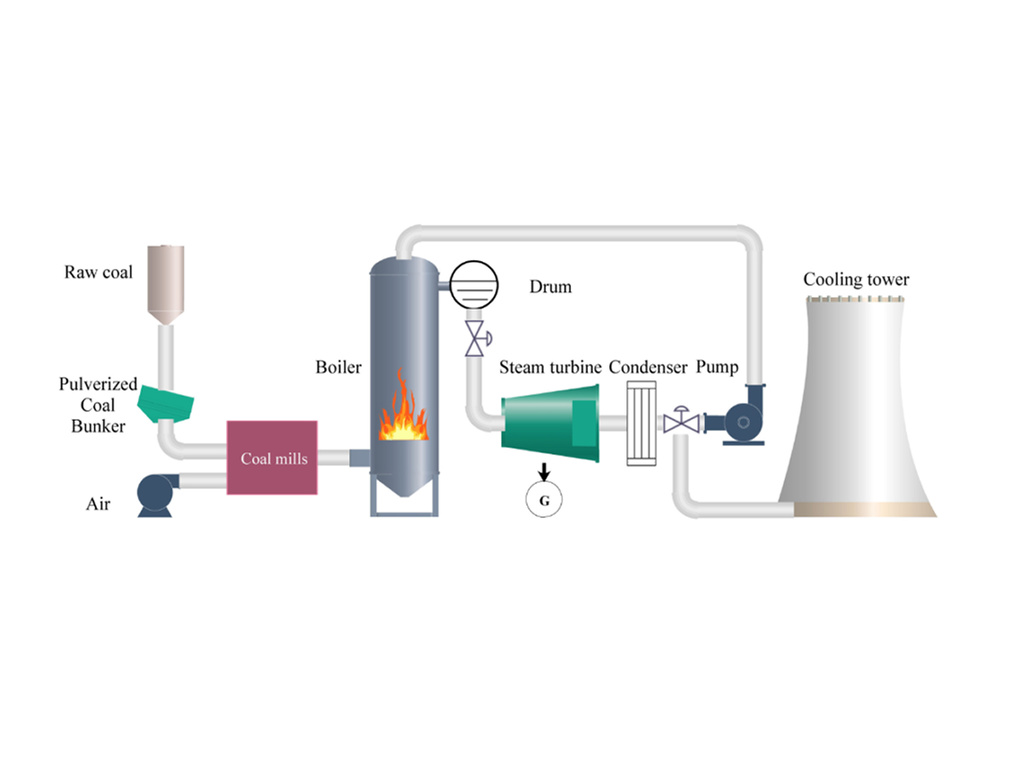
Our platform provides a sophisticated multi-objective optimization control system designed for high-performance industrial applications. By employing advanced control theory, we significantly improve the efficiency and response time of boiler-turbine systems, as demonstrated through our control strategy for a 160 MW boiler-turbine model.